
Why Choose AE Suppliers
As a direct source factory with in-house flexible PV engineering capabilities, we design and manufacture lightweight, durable off-grid mobile solar systems built to withstand harsh environments. Our end-to-end production ensures reliable quality, stable supply, cost efficiency and full technical support from development to delivery.
Advanced Flexible PV
Adaptable CIGS technology that follows the contours of curved surfaces, ensuring maximum power performance where traditional rigid panels fail.
Proven Durability
Industrial-grade ETFE armour provides extreme climate resilience against UV instability and impact resistance, tested for the African frontier.
Off-Grid Optimized
Advanced heat dissipation ensures peak performance at high temperatures, outperforming standard panels in intense solar environments.
Ultra-Lightweight
Weighing less than 3kg/m², our arrays minimize structural load, maintaining your vehicle’s center of gravity and preserving fuel efficiency.
AE-Supplies CIGS
Alternative Suppliers - HBC
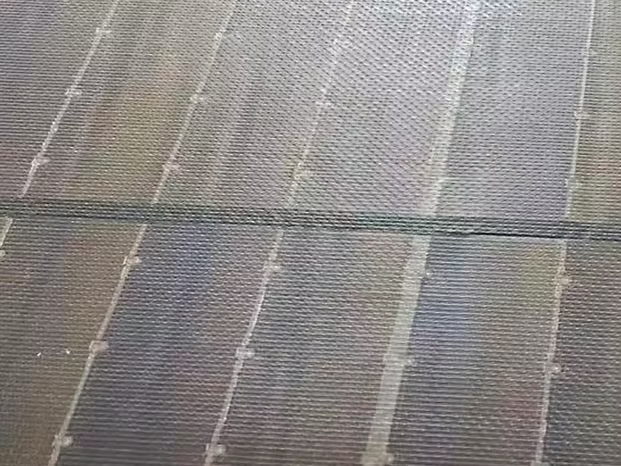
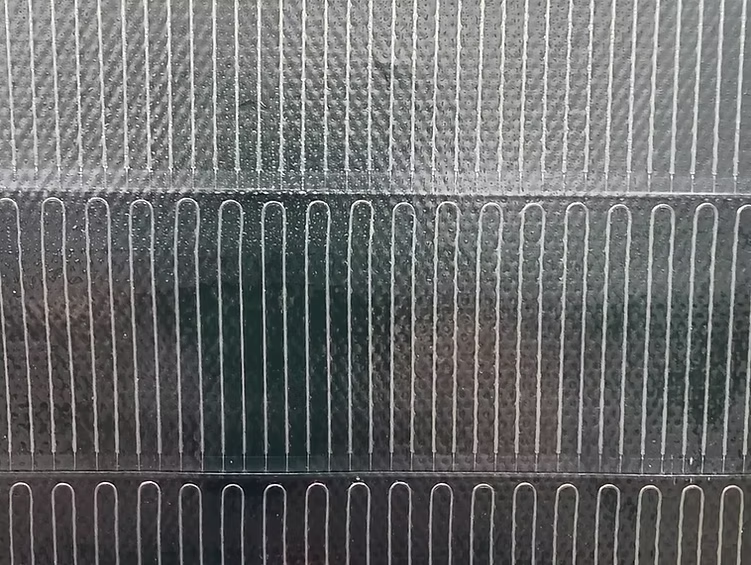
- Flexibility – Commonly metal foils (e.g., stainless steel), polyimide (PI), or ultra-thin glass
- Minimum Bending Radius -As low as 1–3 cm; demonstrated >3,000 to even 40,000 bending cycles (e.g., Soochow University, 2026)
- Mechanical Durability – Polycrystalline/amorphous CIGS film offers excellent ductility and fatigue resistance
- Damp Heat / UV Stability – CIGS is sensitive to moisture/oxygen; however, advanced encapsulation (e.g., ALD barrier layers) has greatly improved reliability
- Light Induced Degradation – No LID – CIGS material is inherently stable under illumination
- Hot Spot Effect – Monolithic interconnection naturally suppresses hot spots. Fitted with 172 Blocking diodes
- Field-Proven Lifetime – Commercial CIGS modules have >15–20 years of outdoor operation records; accelerated aging tests suggest >15-year expected lifetime for flexible variants. Flexible CIGS shows <5% efficiency loss after 1,000 hours at 85°C/85% RH (2025 research data).
- Material Cost – Extremely thin absorber layer (<3μm); minimal material use—but indium is scarce and price volatile.
- Manufacturing Process – Compatible with roll-to-roll (R2R) sputtering + selenization; scalable for mass production, though co-evaporation/selenization control is challenging
- Product Maturity – GW-scale flexible CIGS production achieved by companies like MiaSolé and SUN HARMONICS
- Flexibility – Typically ultra-thin crystalline silicon wafers (<100 μm) or specialised flexible substrates (e.g., polymer with transparent conductive layers).
- Minimum Bending Radius – ~5–10 cm; limited by the inherent brittleness of silicon.
- Mechanical Durability -Prone to microcracks under repeated bending due to the silicon’s brittle nature
- Damp Heat / UV Stability – Silicon itself is stable, but flexible encapsulation may allow moisture/oxygen ingress
- Light Induced Degradation – Crystalline silicon-based; minor LID persists despite back-contact design
- Hot Spot Effect – Susceptible to hot spots; requires bypass diodes
- Field-Proven Lifetime – Rigid HBC modules offer 25-year linear warranties; flexible versions lack long-term field data. Rigid HBC retains >90% after 25 years; flexible version data insufficient
- Material Cost – High-purity silicon, ITO, low-temperature silver paste; low yield for ultra-thin wafers
- Manufacturing Process – Requires low-temperature processing compatible with flexible substrates; complex HBC fabrication
(a-Si passivation + rear metallization) - Product Maturity – Rigid HBC commercialised (e.g., Maxeon); flexible HBC not yet scaled.
shipping
Available global shipping
CUSTOMIZED SERVICE
Get Custom Services with a Free Consultation.
BUYING GUIDE
Make Informed Choices with Our Comprehensive Buying Guide
shipping
Need Help? Just Contact Us sinpo@sinpo-metal.com